Baccarat Zero Total: The Tie That Isn't a Tie
The dealer slides the cards across the felt, you flip a 4 and a 6, and the total hits zero. In standard baccarat, zero is the worst hand you can hold — it loses to literally everything except another zero. But here's the question that trips up even seasoned high rollers: what actually happens when both the Player and Banker end up with a zero total? 🤔 The answer isn't as simple as "it's a tie," and the house edge implications are where the real money hides.
The Mathematical Reality of a Zero Total
In baccarat, card values are straightforward — tens and face cards count as zero, and any total exceeding nine drops the tens digit. So a 4 plus a 6 equals 10, which reduces to zero. This is where novice players get confused. They see "zero" and think the hand is dead. Wrong. A zero total is a live, ranked hand — it just happens to sit at the absolute bottom of the hierarchy.
When both sides land on zero, the hand is declared a tie. No third-card drama changes that outcome. The Player hand doesn't bust, the Banker hand doesn't win by default, and nobody walks away with a "natural" victory. It's a push. But here's the kicker that most casual players miss: a zero-zero tie is statistically one of the rarest outcomes in the entire game, clocking in at roughly 0.0045% probability on an eight-deck shoe. That's less than one in twenty thousand hands.

Why the Zero-Zero Tie Matters for Your Bankroll
If you're betting the Player or Banker line and the hand ends zero-zero, you lose. Period. Your stake goes to the house, not back to your pocket. Only players who wagered on the Tie bet collect a payout — typically 8:1 or 9:1 depending on the table. This is the brutal reality that separates baccarat zero total outcomes from standard ties with higher values.
Think about it from a risk perspective. A zero-zero tie isn't just rare — it's a bankroll assassin for anyone who ignores the Tie bet's true odds. The house edge on Tie wagers sits between 14% and 15% on most tables. That's not a typo. You're paying a massive premium for a payout that doesn't remotely compensate for the actual probability. The zero total scenario is the perfect illustration of why the Tie bet is a trap for the mathematically illiterate.
The Third-Card Rule and Zero Totals
Here's where the mechanics get spicy. If either hand draws a third card, the zero total can shift dramatically. Suppose the Player holds a zero and draws a face card — still zero. But draw an ace, and suddenly you're sitting on a one. The Banker's drawing rules depend on the Player's third card, creating a matrix of possibilities that most players never bother to memorize.
The critical detail: once both hands stand on zero after all drawing is complete, the tie is locked. No dealer discretion, no pit boss intervention, no "let's run it back" nonsense. The shoe moves on. This is exactly why professional players treat the Tie bet as a sucker's wager — the zero-zero scenario is the rarest possible tie, yet it's the one that generates the most confusion at the table.
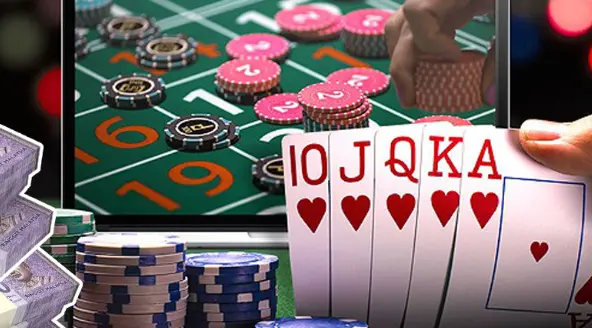
Hardware and Shoe Composition Impact
Ever wonder why some shoes seem to produce more zero totals than others? It's not superstition — it's deck composition. An eight-deck shoe contains 128 zero-value cards (tens and faces) out of 416 total cards. That's roughly 30.7% of the shoe. When you're calculating the probability of a baccarat zero total, you're not dealing with a simple coin flip. The removal of each card changes the conditional probability for the next hand.
Card counting won't save you here. The zero-zero tie is so rare that no realistic bet-sizing strategy can exploit it profitably. The house edge on the main lines — Player at 1.24% and Banker at 1.06% — remains virtually unchanged by zero totals. The only bet that cares about zero-zero is the Tie, and the Tie is a mathematical graveyard.
The Dealer's Perspective and Table Flow
Ask any veteran dealer about zero totals and you'll get a knowing smirk. They've seen players slam the table, curse the shoe, and demand a reshuffle — all because a zero-zero tie wiped out their Banker bet. The dealer just shrugs and collects. The cards don't care about your feelings. The math doesn't negotiate. A zero total is a zero total, and the house edge grinds on.
What most players never realize is that the zero-zero tie creates a psychological ripple at the table. Players start chasing the Tie bet, convinced the shoe is "due" for another one. This is gambler's fallacy at its finest. Each hand is independent. The probability of a zero-zero tie on the next hand is exactly the same as it was on the last one — infinitesimally small.
Final Technical Takeaway on Zero Totals
The zero total in baccarat is not a void, not a bust, and not a win for either main line. It's the lowest-ranked live hand, and when both sides land on it, the Tie bet collects while everything else loses. The probability is brutal — under 0.005% — and the payout structure is worse. If you're betting the Tie hoping for a zero-zero miracle, you're lighting money on fire. The shoe doesn't care. The math doesn't blink. And the house edge just keeps compounding with every hand you play.